Time Management Challenges Among Students
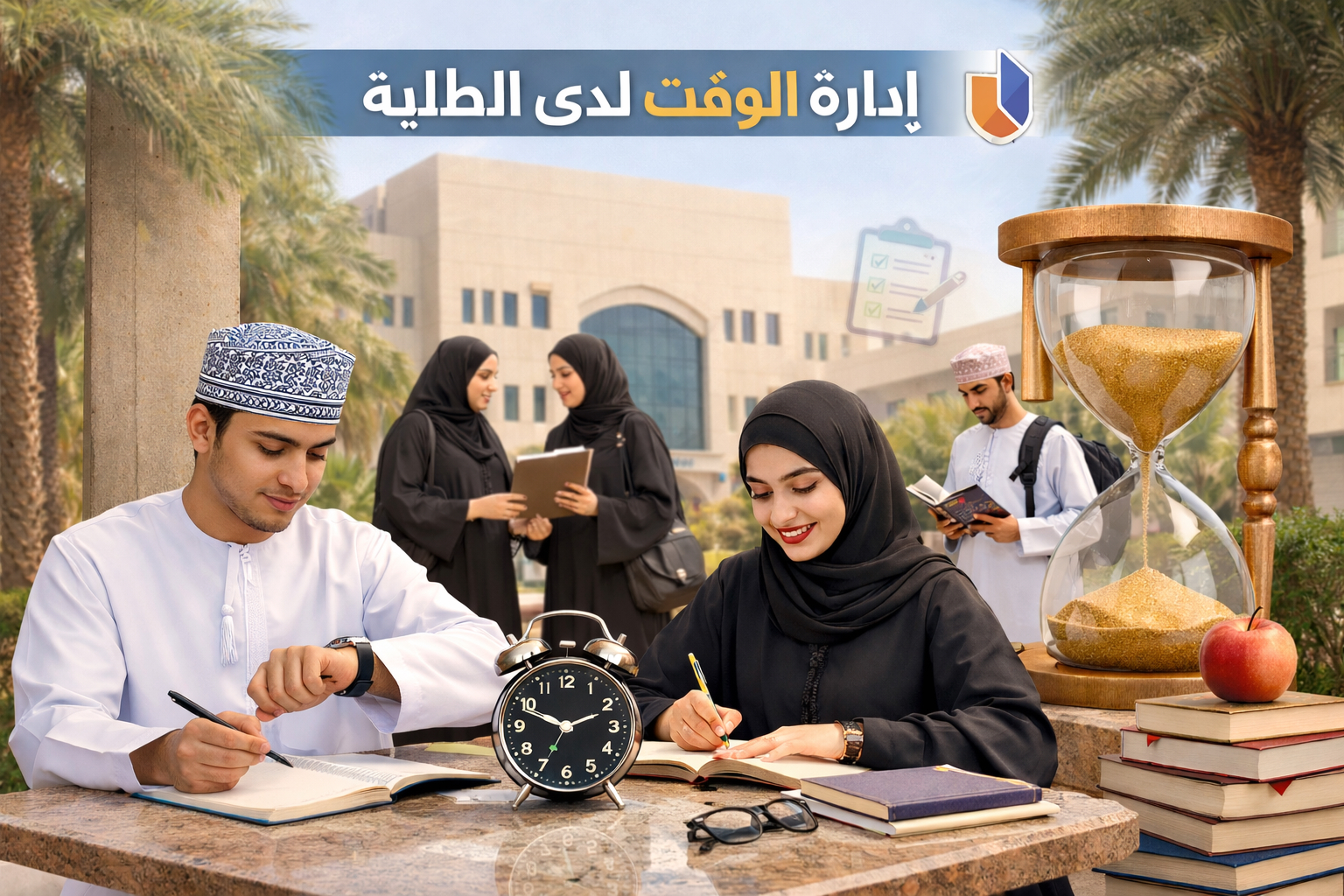
In the face of the accelerating pace of university life and increasing academic requirements, time management has become one of the most prominent skills that students need to achieve success and balance in their lives. With the multiplicity of responsibilities between lectures, assignments, and exams, many students face clear challenges in organizing their time, especially in the early stages of university study, as the student moves to a new environment that requires a higher level of independence and discipline.
Observations show that a wide segment of students suffers from poor time management, where prior planning for their academic day is absent, and some rely on a random method of completing tasks, which leads to the accumulation and postponement of assignments. As exam dates approach, the pressure on students doubles, and they find themselves facing a large number of uncompleted tasks, which directly affects their focus and academic performance.
In this context, several factors contribute to this problem, as procrastination emerges as one of the most common behaviors among students, along with the excessive use of social media, which drains a large part of their daily time without them realizing it. Some students also suffer from difficulty in defining their academic priorities, or distributing their time between study and rest, in addition to a lack of awareness of the importance of organizing time as a basic skill for university life.
The effects of poor time management are not limited to the academic aspect only, but extend to include psychological and social aspects, as students face increasing levels of stress and anxiety as a result of the accumulation of academic tasks. This may appear in the form of mental and physical exhaustion, loss of motivation towards study, or even difficulty in achieving a balance between their academic and personal lives.
Academic advisor Hajar Al-Saidi confirms that students in the first years of university study face clear challenges in adapting to the nature of the new stage, noting that relying on studying at the last minute is one of the most behaviors that negatively affect academic achievement. She also explains that the absence of prior planning and not organizing priorities lead to increased pressure on the student, especially during exam periods, which requires continuous awareness of the importance of time management and setting clear study schedules.
Through student experiences, student Al-Ayham Al-Siyabi explains that he faced difficulty in organizing his time at the beginning of his university career, as he used to postpone his duties and rely on the availability of time later. However, the accumulation of tasks made him feel great pressure that affected his academic level, before he realized the importance of organizing his time and adhering to a daily plan, which contributed to a significant improvement in his performance.
Student Al-Ghalia Al-Busaidi also indicates that she faced challenges in her first years in reconciling study and personal life, especially with the difference in university lifestyle from previous stages. However, she was gradually able to develop her skills in organizing time, by adhering to a daily schedule and defining her priorities, which was positively reflected on her academic level and psychological stability.
In light of these data, it is clear how important it is to adopt a group of practices that help students improve their time management, by setting clear study plans, organizing daily tasks, reducing distractions, in addition to benefiting from academic guidance, and working to achieve a balance between study and rest, which contributes to enhancing their ability to adapt to the requirements of university life.
In conclusion, time management remains a basic skill that is indispensable in the life of a university student, as it contributes directly to improving academic performance and enhancing psychological stability, and enables students to face challenges with confidence and efficiency, which reflects positively on their educational experience in general.